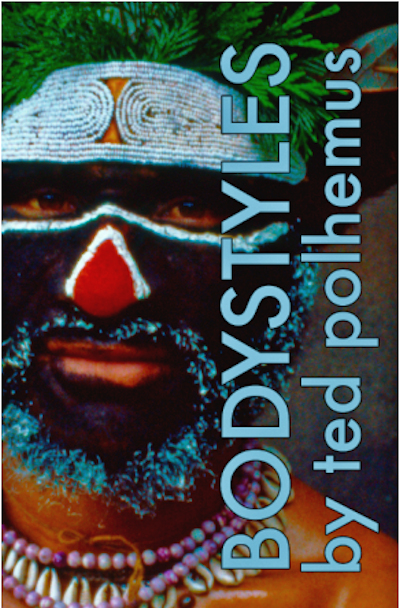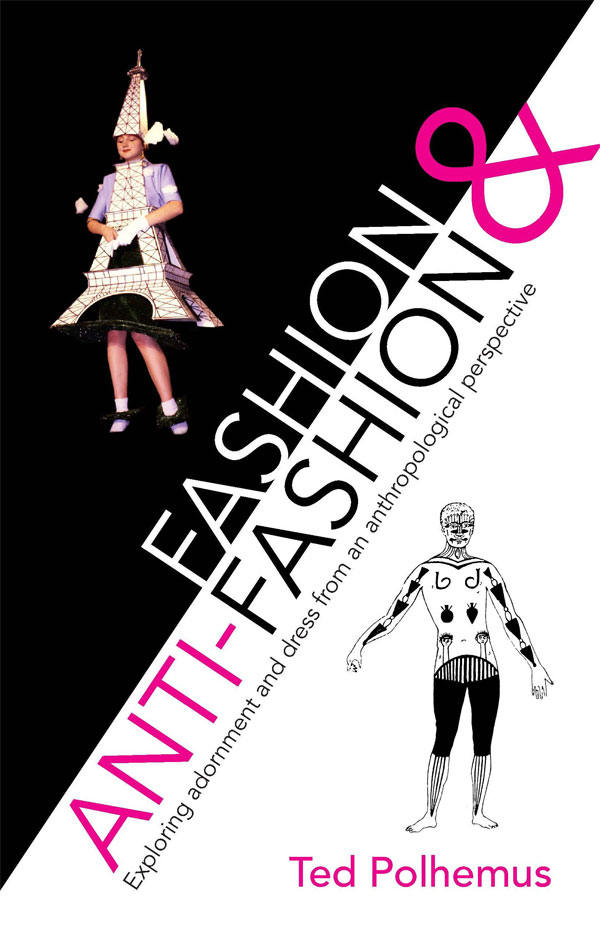
In the beginning there was style. Invented by our earliest ancestors, perhaps 100,000 years ago, this approach to transforming appearance served to mark out the boundaries of each tribe, to indicate differences of role and status within the group and to emphasise the unchanging continuity of traditional ways of life. Then, in the Renaissance with the birth of modernism, fashion was born - demonstrating and celebrating constant change and progress. In the last few decades, however, fashion has gone out of fashion and style has re-emerged as the dominant force - but now with the emphasis upon individual, personal expression.
‘The fashion/anti-fashion distinction is concerned with changing and fixed modes of adornment respectively. Furthermore, changing fashion looks reflect and express changing, fluid situations of social mobility, while anti-fashion styles reflect and express fixed, unchanging, rigid social environments. For this thesis to have any validity, however, it is important to emphasize that, as regards both social and stylistic change, we are concerned not with any quantitative, measurable, objective rate of change, but rather with impressions, perceptions, assumptions and the ideology of change and progress.’
‘Fashion is not simply a change of styles of dress and adornment, but rather a systematic, structured and deliberate pattern of style change.’
‘Those who in the 1960s thought that fashion was dead, that 'fashion is not fashionable any more', forgot that anti-fashion images in the context of the fashion system acquire a new meaning and a new mode of communicating that meaning. Hippy, Hell's Angel, peasant and worker styles, when worn by the fashionable, are no longer folk costumes or true streetstyle; they are part of the fashion system. The style may remain much the same - indeed, it may even be the same garment - but its significance has been changed fundamentally.’
‘Fashion is the natural, appropriate language of the socially mobile, those between rather than within traditional social groups. While symbolizing social mobility and change, fashion also symbolizes the social rootlessness, anomie, alienation and atomization which are the requisite and the result of this social change. Fashion's function is to represent and identify the social and cultural limbo of modern urban society, where more and more people are on the move between the lower and middle classes or between the middle and upper classes, or within the middle class. Many of us increasingly find it difficult to know where we fit in the social order. The old categories no longer seem to apply. Here is, and always has been, the spawning ground of fashion.’
‘Identification with and active participation in a social group always involves the human body and its adornment and clothing. Being a Nuba, a Beatnik, a Hasidic Jew, a Hell's Angel or a Hippy involves looking like a Nuba, a Beatnik, a Hasidic Jew, a Hell's Angel or a Hippy. Furthermore, the particular style which each group adopts as 'our costume' is not arbitrary and is not interchangeable with the style of other groups: Hell's Angels could not dress like, for example, the Hare Krishna people and still visually communicate the ideology of the Hell's Angels, and vice versa. It is in this way that anti-fashion styles are appropriate - 'natural' - social symbols. They state not only that 'we' exist (i.e. that 'we' are a group), but they also express symbolically what kind of group it is that 'we' are.’
‘But while some elements within the ‘fashion world’ have drifted into anti-fashion, fashion has been busy making guerrilla raids on the most unsuspecting anti-fashion groups to kidnap a booty of anti-fashion styles and ideas which can be fashionalized and, after a brief spell spotlighted by the glare of the ‘In’, discarded on the junk heap of un-fashion. It is important to underline again the fact that the conflict of fashion and anti-fashion is not between particular styles (e.g. Cavaliers versus Roundheads, Skinheads versus Hippies) or between different designers' ‘looks’ within a fashion season (e.g. Prada versus Gucci). Within fashion and also within anti-fashion, conflict is between image A and image B. The conflict between fashion anti-fashion, on the other hand, could be represented as the clash of images A, B, C, etc. (specific anti-fashion styles) and images A1, B1 C1, etc. (that is, image A, etc. after fashionalization). The image itself need not change much: fashionable 'boiler suits' which appeared in Britain in the 1970s were, despite alterations in some cases, still essentially boiler suits as worn by genuine British workmen everywhere. The look of the garment remains basically the same, but the sociological, temporal and semiological-linguistic context of the style has been radically changed by its fashionalization.'
'So when modernism bought the farm (or, perhaps, migrated South and East) so too did that ravenous desire and delight in The New which had for centuries fuelled the hot engine of fashion. And not only did the last few decades see a change in our attitude to change but this era since Fashion & Anti-fashion was first published has also seen a phenomenal rise in our hunger for individuality - most especially for a one-off, self-made, authentic individuality which (it is to be hoped) gives us meaning even within the endlessly replicating simulacrum of The Matrix; a unique, bespoke, authentic individuality which lets us stand apart from the mass of sad sack marketing target group, sheep-like replicants who have invaded our planet.'
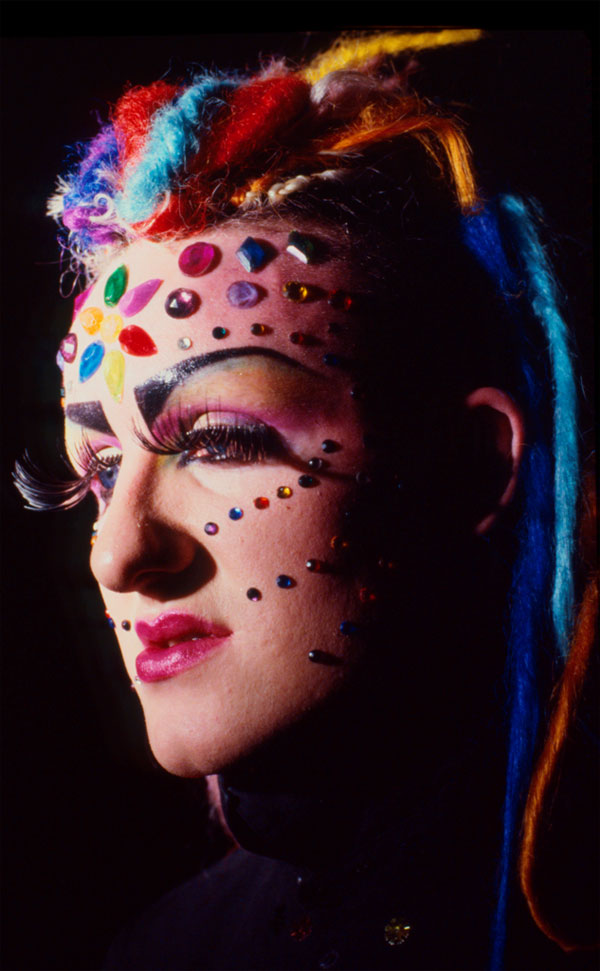
'As well as causing us to refuse the dictated conformity which ‘fashion victims’ once put up with, even welcomed, our new cult of authentic individuality has also made problematic membership in those very subcultures - including our po-mo heroes the Punks - which produced the streetstyle which first offered an alternative to the seemingly endless (not) succession of new ‘New Looks’ which the fashion system declared ‘In’.'
'Post-fashion, post-subcultural, it’s a you're-on-your-own-mate-free-for-all out there.'
'While the defining characteristics of costume are regional variability and 'timelessness', fashion is characterized by perpetual, restless change and by regional (even global) uniformity. If costume could be described as an advertisement for the status quo, fashion is an advertisement for change and progress. By perpetually substituting this year's 'New Look' for last year's 'New Look' (which has become tarnished by time), fashion defines 'seasons' and thereby creates the impression of change. While costume aims to be fixed or frozen in time (and thereby to reify a steady-state system of time perception), fashion is a relentless march forward - of style and, by implication, of time itself. (Which is, of course, just as much a fiction as is costume's 'timeless' immutability.)'
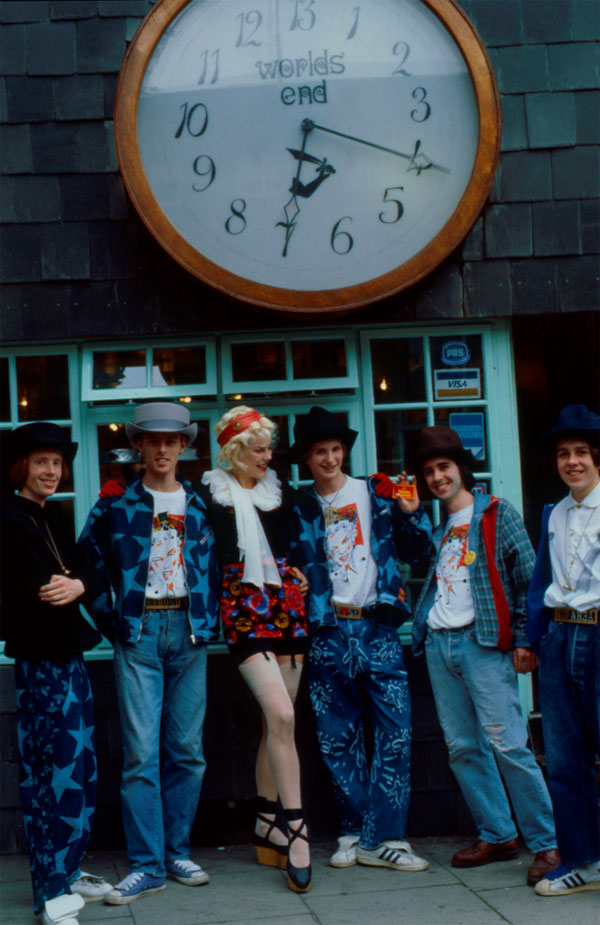
'From the 1980s to today it is the differences from one designer to the next which are important, while yearly fluctuations are no longer as marked or as significant as they were in, for example, the '60s when one really could pinpoint the common denominator of a given season's 'direction'. With the result that large segments of the so-called 'fashion industry' are no longer engaged in the business of producing 'fashion' in a strict sense of the word.'
'As we have seen, back in the '60s, the opprobrium of being labelled 'old fashioned' caused everyone ('your sister, your auntie, the gym mistress, everyone' as Peter York puts it so well) to get out a needle and thread and (even if reluctantly) attempt to 'keep up with the times'. Today, on the other hand, it is only a minority who appear to feel compelled to follow the latest looks - a minority who are now often dissed as 'fashion victims' and 'trendy' (an ultimate complement in the '60s, now a disrespectful putdown).